Sunday, June 6, 2010

The Future of Transportation

Transportation is one of the most important, yet also one of the most overlooked activities within modern society. The efficient, affordable and rapid movement of people and goods from origin to destination is necessary to support many aspects of modern life; yet often it seems little thought is given to this topic until something breaks down. On the one hand, this can be taken as a positive sign of the success of our transportation system and its managers in meeting the daily needs of individuals and society as a whole in an unobtrusive manner. On the other hand, it can also mean that people are both unnecessarily surprised and befuddled when there are problems. And there will be problems; of that one can be confident.

In reality, millions of people across the globe spend a great deal of time, effort, expense and concern every day assuring that our transportation system functions as best as it can. Recent estimate suggest that, depending on how one defines the term, ‘transportation’ can account for as much as 10% of both the nation’s workforce and total expenditures. Transportation by its very nature has a profound impact on, and in turn is impacted by, a variety of other major societal and economic activities. These include energy supplies, costs and usage; environmental topics such as air and water pollution, global warming, and carbon emissions; local, national and international trade and employment patterns; land use decisions such as the placement of factories, warehouses, offices, shopping centers and residential communities; infrastructure investment; the development and application of technologies; and demographics. Thus, studying transportation and thinking about its current and future role in our society is in many respects a microcosm for thinking about our society and way of life as a whole.
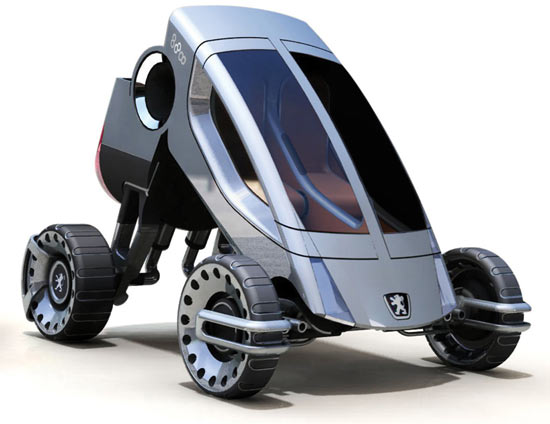
This paper is written for those interested in thinking comprehensively about transportation, the role it plays and will continue to play in our life, and how this role may both change and be changed by the future. It provides a common starting point for a broad discussion of the topic of the future and transportation’s constantly transforming role within it and points to a number of public policy issues that will need to be addressed. Section II of this paper discusses the general characteristics of future demographic and economic trends. Section III relates these trends to the safety, energy, environmental and economic aspects of transportation. Section IV describes how these trends will impact the major transportation market segments. Section V reviews the major technologies that hold the greatest promise for improving future transportation. Finally, section VI suggests some key questions to ponder on the future of transportation.

This paper was assembled from a wide variety of published sources and discussions with a number of individuals focusing on the major social, political, economic, and technological factors that affect global systems such as transportation. Noted futurists were consulted and provided valuable insights and ideas. It should be pointed out that this paper projects what could be called a ‘plausible’ or ‘probable’ view of the future. Catastrophic events that could significant alter the possibility of life on the planet or normal human evolution (i.e., World War III, famine, pandemic, asteroid impact, alien visitations, etc.) were deliberately excluded from consideration. There is, of course, no guarantee that these trends will actually develop as described here; or for that matter that one of these catastrophes may or may not happen. However, it does allow for the creation of a ‘straw man’ vision of the future for purposes of dialogue and discussion.

Sunday, May 2, 2010

Motorcycle

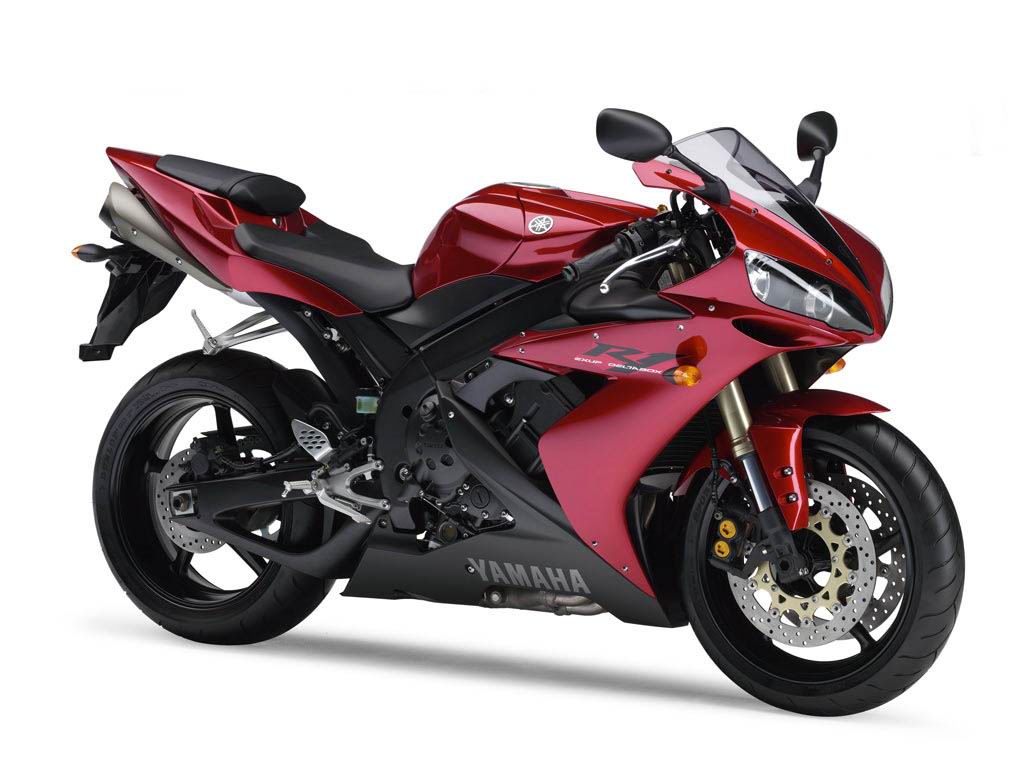
Auctions can be very rewarding places to look for motorcycles, particularly if you're after good value. But do not make the mistake of thinking that going this route will be easy and effortless. Auctions do not always guarantee you'll find what you're looking for or even get a bike that fits your preference and budget. You could, however, make sure that you increase the chances you'll drive a good unit home by using these tips:

Have a clear idea about your specs

Before you head out to an auction lot or go online, make sure you know the type of motorcycle that's the right fit for you. Auctions can be quite confusing especially to a beginner and the array of available motorcycles can easily overwhelm you. If you do not know what you really want in a motorcycle beforehand, it will be very easy to become overwhelmed.

Remember, too, that there is a huge difference between what you want and what you need. Try to compromise if you want the best of both worlds in terms of style, power, price and utility. Remember that what you are looking for is value. The better your perspective is, the more likely you'll find what you're looking for.

Get as much information as you can

Most auction lots provide a catalogue prior to the auction date. Get one of these. When buying motorcycles from auctions, you'll find a catalogue very valuable in helping you make informed decisions prior to purchase. If you'll be participating in an online auction, you will also find information about available units on the website.

If you have your eyes set on a particular make, brand or model, do your research first. It would help you a great deal if you know what to expect from an available bike about to be auctioned in terms of quality, performance and safety.

Inspect the motorcycle personally

Unless you know and trust the owner/operator of the auction lot, it's recommended that you inspect the unit yourself. There's a good chance that you probably won't be able to test-drive the bike, so checking the motorcycle yourself is the next best thing.

In most cases, an auction will require you to pre-register as one of the bidders. You will then be given enough time to inspect the units prior to the actual bidding. If you have little experience or know-how regarding bikes, bring someone who does with you. Your friendly mechanic, for example, will save you time, effort and money later.

Put a cap on your budget

When you really, really want something, or at least think that you do, you could get carried away just to ensure you make the winning bid. Before you know it, you could be paying more for a motorcycle than you ought to or worse, you could even end up with a bid price you can ill afford. Remember there are other costs associated with purchasing a motorcycle from auction lots, such as taxes, fees and other charges.

When participating at motorcycle auctions, decide on your maximum bid price, keeping in mind the extra costs you will have to pay for.

Thursday, April 22, 2010

Aeroplane

airplane ,aeroplane or aircraft, heavier-than-air vehicle, mechanically driven and fitted with fixed wings that support it in flight through the dynamic action of the air.

Parts of an Airplane
The airplane has six main parts—fuselage, wings, stabilizer (or tail plane), rudder, one or more engines, and landing gear. The fuselage is the main body of the machine, customarily streamlined in form. It usually contains control equipment, and space for passengers and cargo. The wings are the main supporting surfaces. Modern airplanes are monoplanes (airplanes with one wing) and may be high-wing, mid-wing, or low-wing (relative to the bottom of the fuselage). At the trailing edge of the wings are auxiliary hinged surfaces known as ailerons that are used to gain lateral control and to turn the airplane.

The lift of an airplane, or the force that supports it in flight, is basically the result of the direct action of the air against the surfaces of the wings, which causes air to be accelerated downward. The lift varies with the speed, there being a minimum speed at which flight can be maintained. This is known as the stall speed. Because speed is so important to maintain lift, objects such as fuel tanks and engines, that are carried outside the fuselage are enclosed in structures called nacelles, or pods, to reduce air drag (the retarding force of the air as the airplane moves through it).

Directional stability is provided by the tail fin, a fixed vertical airfoil at the rear of the plane. The stabilizer, or tail plane, is a fixed horizontal airfoil at the rear of the airplane used to suppress undesired pitching motions. To the rear of the stabilizer are usually hinged the elevators, movable auxiliary surfaces that are used to produce controlled pitching. The rudder, generally at the rear of the tail fin, is a movable auxiliary airfoil that gives the craft a yawing (turning about a vertical axis) movement in normal flight. The rear array of airfoils is called the empennage, or tail assembly. Some aircraft have additional flaps near the ailerons that can be lowered during takeoff and landing to augment lift at the cost of increased drag. On some airplanes hinged controls are replaced or assisted by spoilers, which are ridges that can be made to project from airfoils.

Airplane engines may be classified as driven by propeller, jet, turbojet, or rocket. Most engines originally were of the internal-combustion, piston-operated type, which may be air- or liquid-cooled. During and world war 2, duct-type and gas-turbine engines became increasingly important, and since then jet propulsion has become the main form of power in most commercial and military aircraft. The landing gear is the understructure that supports the weight of the craft when on the ground or on the water and that reduces the shock on landing. There are five common types—the wheel, float, boat, skid, and ski types.

Developments in Airplane Design
Early attempts were made to build flying machines according to the principle of flight, but these failed; it was not until the beginning of the 20th cent. that flight in heavier-than-air craft was achieved. On Dec. 17, 1903, wright brothers produced the first manned, power-driven, heavier-than-air flying machine near Kitty Hawk, N.C. The first flight lasted 12 sec, but later flights on the same day were a little longer; a safe landing was made after each attempt. The machine was a biplane (an airplane with two main supporting surfaces, or wings) with two propellers chain-driven by a gasoline motor.

The evolution of the airplane engine has had a major effect upon aircraft design, which is closely associated with the ratio between power load (horsepower) and weight. The Wright brothers' first engine weighed about 12 lb (5.4 kg) per horsepower. The modern piston engine weighs about 1 lb (0.4 kg) or less per horsepower, and jet and gas-turbine engines are much lighter. With the use of jet engines and the resulting higher speeds, airplanes have become less dependent on large values of lift from the wings. Consequently, wings have been shortened and swept back so as to produce less drag, especially at supersonic speeds. In some cases these radically backswept wings have evolved into a single triangular lifting surface, known as a delta wing, that is bisected by the fuselage of the plane. Similar alterations have been made in the vertical and horizontal surfaces of the tail, again with the aim of decreasing drag.
For certain applications, e.g., short-haul traffic between small airports, it is desirable to have airplanes capable of operating from a runway of minimum length. Two approaches to the problem have been tried. One, the vertical take off landing (VTOL) approach, seeks to produce craft that take off and land helicopters, but that can fly much faster. The other approach, shottake off landing(STOL), seeks to design more conventional aircraft that have reduced runway requirements. The lessened lift associated with swept-back wing designs increases the length of runway needed for takeoffs and landings. To keep runway lengths within reasonable limits the variable-sweep, or swing, wing has been developed. A plane of this type can extend its wings for maximum lift in taking off and landing, and swing them back for travel at high speeds.

A proposed variant of the swing wing, in which one wing sweeps to the rear and another forward, produces an arrangement that causes a minimum shock wave at supersonic speeds. It is thought that if this modification were applied to supersonic transport (SST) designs it would somewhat lessen their objectionable noise levels. No solution has been proposed to lessen their high fuel consumption, however. Recent developments in fan-jet engines, in which a turbine powers a set of vanes that drive air rearward to augment thrust, have made supersonic flight possible at low altitude. Much research has also gone into reducing the noise and air pollution caused by jet engines.

Tuesday, April 20, 2010

BMW 650i Pros And Cons
The BMW 650i is a fascinating car that is increasing in popularity. This article discusses the pros and cons of the car.

Dubai Cars - Driving Safely
Driving in Dubai can be a challenge and may initially be intimidating. With some experience behind the wheel in Dubai, coupled with basic knowledge of local driving regulations, expats should soon feel comfortable taking to the roads.

Refresh Engine with Radiators
Automotive radiators are the important components of a vehicle's cooling system. A vehicle's cooling system is intended to protect the engine from the destructive forces of too much heat. Radiators take charge of removing excess heat from the engine even under the most extreme conditions. Cooling the motor helps it last longer, taking the vehicle to the distance. If the system isn't in good repair, simple tasks such as sitting idle in rush-hour traffic can cause a vehicle to overheat even when temperatures drop below the freezing mark.

Finger Tip Points On Car Donation
Car donation is practiced when you gift to a charity organization or such institution your automobile which may or may not be in useable condition. You must have thought of needy people at times and longed to do something for them. Unfortunately, you end up confused how to and what to donate for charity so that the less fortunate can have a better living.

Mazda Parts: Guaranteed to Fit and Perform at the Optimum Level
Mazda is currently one of the world’s largest automobile manufacturer companies in terms of global unit sales.

Buy Motor Accessories, Motor Home Parts Online
Affordable price and thrilling experience – these are the very assets of all car brands automotives. Due to these features the brand has gained popularity across the globe. Owning a Mazda car, Nissan JDM parts is an excellent investment and a status symbol.

Auto Financing Scams
How to avoid becoming a victim of Car dealers.
For some, the prospect of changing out speakers is a daunting one, since you have to remove the door panels to access the speakers tucked away within its walls. They are not a tricky as they seem, if you know the right techniques.

Importing a Japanese Used Car
The majority of used car buyers do not even consider purchasing from a Japanese carauton,because they believe it is too difficult. However if you understand the correct process then you will find it is not that hard at all. He is a snapshot of how to import a find and import a Japanese car.

Monday, April 12, 2010


Driving your car for a long distance may be tiring and stressful. But if you hire a professional auto transport company you don’t have to worry as they will transport your car properly to your specified destination. Your work will be reduced.

Before transporting your vehicle, you should prepare it for transportation. Firstly, your car must be roadworthy. This is because employees of the auto transport company have to drive it on and off the transporter. Do wash your car before transporting your vehicle for inspection purpose. Do check are there any scratches and dents. Make sure your car is free from leaks. Your car will be transported in batches on one large transporter. You may be responsible if any leakage of fluids occur from you car and damages other cars during transit. Make sure your gas tank is less than a quarter. Other fluids such as break and suspension fluids have room for expansion.

Try to remove accessories your car have. This includes antennae and wide mirrors on the outside of your car and after market CD players on the inside. Disable the alarm in the car. Remove all the personal possessions from the car because Transport Company will not take any responsibility. In fact, Department of Transportation (DOT) does not permit the transport of personal belongings in vehicle transported on auto carriers. Make sure you drive your car to a pick-up point agreed between you and the car transport company.

Finally consider the climatic conditions. If you’re planning to ship your car to Alaska, it would be wise to put anti-freeze into your car before shipping. Do check your heating or air conditioning systems. You can go in for covered transport also as it will protect your vehicle against sun, heat etc.

Before shipping your vehicle do check all the car shipping documents. The key document involved in car transport is bill of lading. This document outlines all the terms and conditions of the agreement between you and the auto car transport company. Bill of lading is a document in which any damages that have already occurred in the car are written. It is important that customer checks bill of lading document carefully before signing it. As any future claims for damages will be made on the basis of the information in this report, you need to check it carefully before signing. Both you and a representative of the car transport company have to sign this both before and after loading. If your car is damaged during transit, you have two weeks to file a complaint.

Ask the transport company do they provide insurance. Your vehicle should be insured against damage and theft by your auto transport company. If you’re transporting your car by ocean container, it has to be professionally packed for the insurance to be valid.